The Gift of Our Limits
Deacon Angelo Volpi’s homily
Twenty-six Sunday in Ordinary Time, Cycle A.
Ezekiel 18:25-28; Psalm 25: 4-5, 6-7, 8-9; Phillipian 2:1-11; Matthew 21:28-32
INTRO
Good afternoon!
Some of you might know that I was born and raised in Italy. For the most part I grew up in a secular environment. There were many sayings used in the popular culture of my region. One of these sayings you would hear when things in life were not going well especially during those times when multiple misfortunes came all at once. It would sounds like this:
“Ma cosa abbiamo fatto di male per meritarci questo?” Translated in English:
“What did we do to deserve this?”
It is a cry of pain, of being unable to change the situation, a sense of profound injustice.
YOU
Have you found yourself in a situation to cry out to God saying: Why me? Why now?
Why did you allow this to happen to me?
GOD
This is fundamentally a question about suffering. Why am I suffering? Why now?
We believe that with the original sin of Adam and Eve suffering became unavoidable and death entered our life.
In a mysterious way oftentimes we find our way to the Church when suffering enters our life. I would push this to say: that for many of us without suffering in our life we would probably not seek God and we might not be here today at Mass.
Saint John Paul II makes an important observation in his apostolic letter Salvifici Doloris. The Old Testament has many accounts of human suffering but there was no specific word for “suffering”. In the Old Testament suffering and evil were identified with the same word. So everything in the Old Testament that is suffering is identified with evil. With the translation of the Old Testament in Greek and with the New Testament a new way to express it came about - “my life is affected by evil, therefore I am suffering”. This distinction helps us see that suffering is not necessarily a personal sin or a punishment we deserve. The book of Job teaches this: Job was innocent and still he suffered. Suffering is the human experience of evil, loss and deprivation of good.
Suffering is not itself a sin and is not proof that the person suffering has done anything wrong. Sometimes our own choices contribute to suffering but even in this case, the suffering is fundamentally rooted in the wounded and broken condition from the original sin of Adam and Eve.
Original sin can be summarized in the fact that Adam and Eve wanted to grasp for more - to grasp at being like God. The serpent invited Adam and Eve in thinking that it was not good to be limited. That it is not good to depend on God and His guidance. The serpent said to the woman: “You certainly will not die! God knows well that when you eat of it your eyes will be opened and you will be like gods, who know good and evil.”
Adam and Eve had everything they needed but they wanted the only thing God told them not to have - the knowledge of good and evil. They fell in believing the lie of the serpent that “it is not good to be limited, to trust in God’s guidance”.
The lie of the serpent is that we must grasp and control what is good and evil for ourselves. Not to receive it from God but to decide it on our own.
Being limited is not a flaw. God created us good, and actually very good as He said in Genesis. But He created us with limitations, as finite creatures. We are finite in our body, the space we live, in our capacity to love and understand. Only God is infinite and unlimited.
He did so out of Love because he knew that we couldn't handle more than that and that we needed to be dependent on Him.
Our limitations, our suffering, is what helps us to become HARD WIRED to God and His guidance.
Because we are limited we will miss the mark at times.
Have you ever reflected on the limitations that God gave you?
Now let’s look at the letter of Saint Paul to the Philippians. This is one of the first New Testament writings, probably written before any of the gospel. In this letter we find embedded a beautiful hymn. It is likely that Saint Paul probably heard it in the early Christians liturgies or in the saying among the new christians communities, the hymn starts in verse 5 :
Have in you the same attitude
that is also in Christ Jesus,
Who, though he was in the form of God,
did not regard equality with God
something to be grasped.
Rather, he emptied himself,
taking the form of a slave,
coming in human likeness;
and found human in appearance,
he humbled himself,
becoming obedient to the point of death,
even death on a cross.
Because of this, God greatly exalted him.
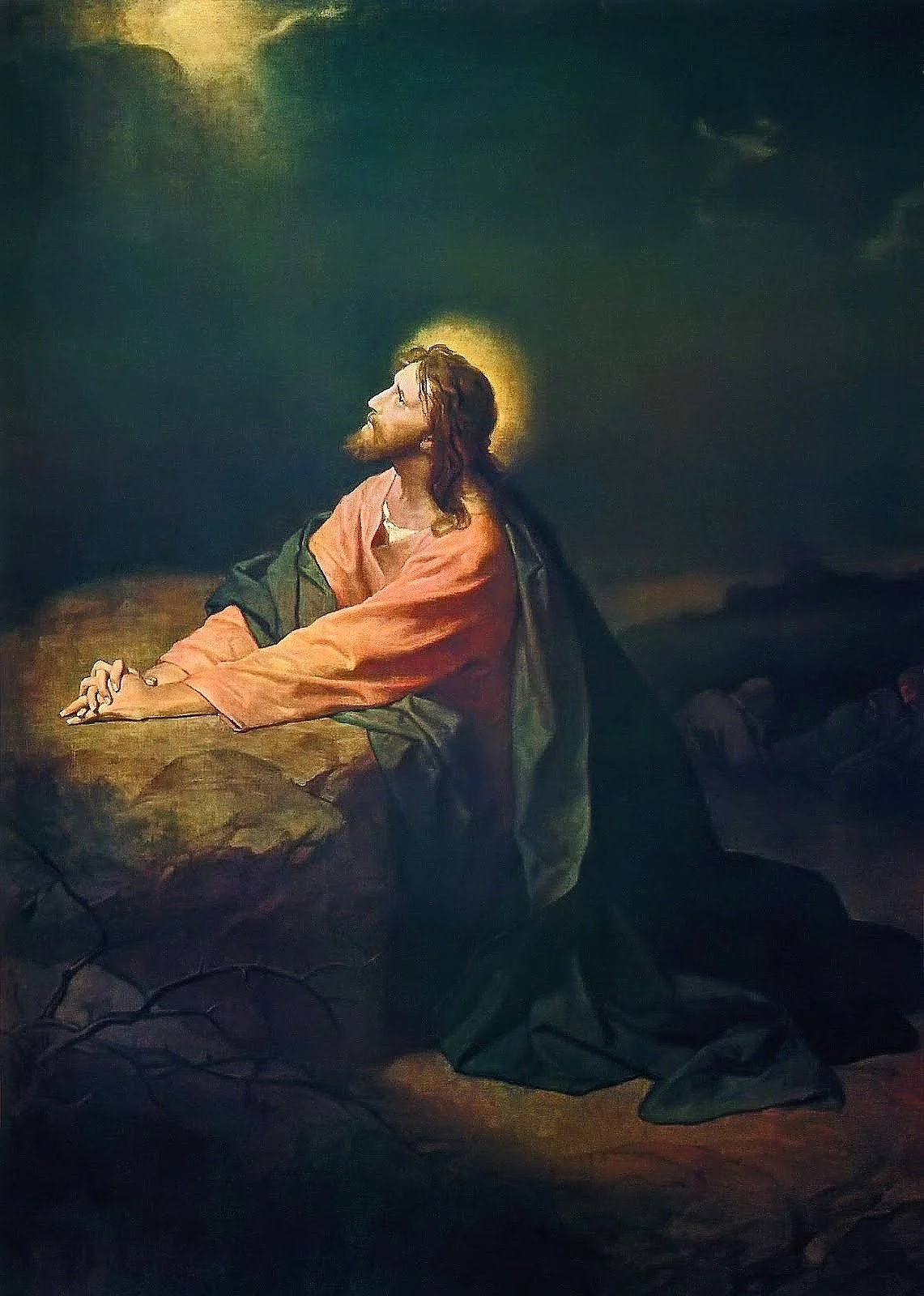
The early christian understood that Jesus did not grasp at his divinity - at being unlimited. He emptied Himself and became limited like us, he added to his divinity our limited human nature. He experienced our limitedness and the same longing for God as we do when we suffer. In the garden of Gethsemane, before going to be crucified Jesus prayed: “Father, if you are willing, take this cup away from me; still, not my will but yours be done.” (Luke 22:42).
Jesus experienced the whole spectrum of suffering and evil that can possibly exist: betrayal, torture, physical pain, physiological pain, spiritual pain, loss of family members and friends. All the suffering that me and you combined have experienced.
YOU
The hymn in the letter of the Philippians invites us to have the same attitude of Jesus Christ - To trust in the Father’s plan and guidance.
Jesus took on Himself human nature, to show us to TRUST always in the Father. That the Father will always give us what we need in time of suffering.
WE
In a few minutes we will line up to receive Jesus - he knows all the pain you are experiencing. As you line up to receive Jesus ask Him to give you the grace to trust that He will provide you with all you need in time of suffering.
